. Medifund
further ensures that no Singaporean will be denied access to basic
medical care just because they are unable to pay.
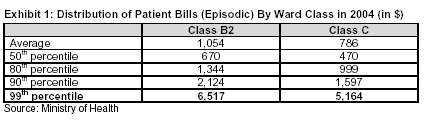
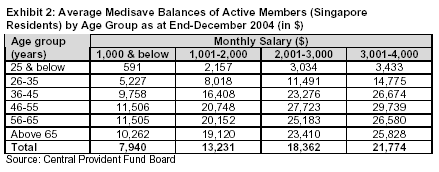
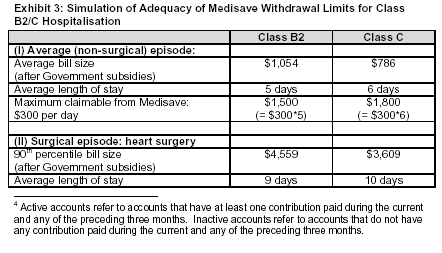
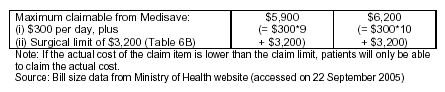
It should be noted, however, that the adequacy of
Medisave balances to cover the majority of B2/C hospitalisation
bills is based on current parameters, including the age profile of
our population and current healthcare costs. Moving forward, two
trends need to be watched carefully:
a. Already today, while the majority of Singaporeans
are currently able to afford hospitalisation at Class B2 and C wards
given Government subsidies and their Medisave balances, some
Singaporeans – especially the low-wage workers and some of the
self-employed – have insufficient Medisave balances to meet their
medical needs. More efforts need to be made to ensure that they
build up their Medisave balances; and
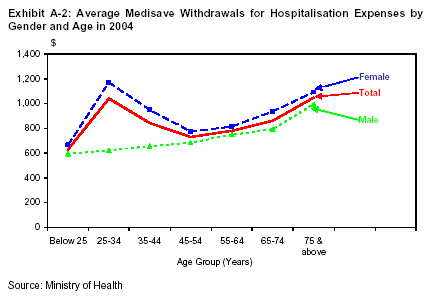
b. Health care costs will continue to rise in line
with global trends. Our population is also greying. Together, these
will result in increased Medisave withdrawals as compared to current
withdrawal trends, based on the age profile of Medisave withdrawals5.
There will therefore be an increase in pressures on Medisave
balances. We cannot assume that adequacy of Medisave balances today
implies the same for tomorrow.
Given these challenges, it remains critical for
Singaporeans to contribute actively to their Medisave accounts and
for policy-makers to remain prudent in their management of Medisave
withdrawal policies.
5 Refer to Annex: Exhibit A-2 for
Medisave withdrawals by age.


 Is Class B2/C Hospitalisation Affordable?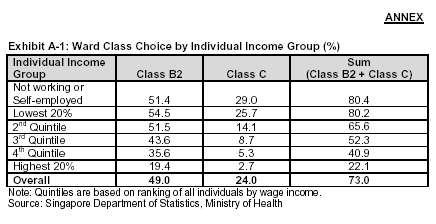


 All rights reserved


